Protests Erupt After Egypt’s Leader Seizes New Power


CAIRO — Protests erupted across Egypt on Friday, as opponents of President Mohamed Morsi clashed with his supporters over a presidential edict that gave him unchecked authority and polarized an already divided nation while raising a specter, the president’s critics charged, of a return to autocracy.  


Maya Alleruzzo/Associated Press

Egyptian protesters chanted antigovernment slogans and waved a national flag in Tahrir Square on Friday.


In an echo of the uprising 22 months ago, thousands of protesters chanted for the downfall of Mr. Morsi’s government in Cairo, while others ransacked the offices of the president’s former party in Suez, Alexandria and other cities.


Mr. Morsi spoke to his supporters in front of the presidential palace here, imploring the public to trust his intentions as he cast himself as a protector of the revolution and a fledgling democracy.


In a speech that was by turns defensive and conciliatory, he ultimately gave no ground to the critics who now were describing him as a pharaoh, in another echo of the insult once reserved for the deposed president, Hosni Mubarak.


“God’s will and elections made me the captain of this ship,” Mr. Morsi said.


The battles that raged on Friday — over power, legitimacy and the mantle of the revolution — posed a sharp challenge not only to Mr. Morsi but also to his opponents, members of secular, leftist and liberal groups whose crippling divisions have stifled their agenda and left them unable to confront the more popular Islamist movement led by the Muslim Brotherhood.


The crisis over his power grab came just days after the Islamist leader won international praise for his pragmatism, including from the United States, for brokering a cease-fire between Hamas and Israel.


On Friday, the State Department expressed muted concern over Mr. Morsi’s decision. “One of the aspirations of the revolution was to ensure that power would not be overly concentrated in the hands of any one person or institution,” said the State Department spokeswoman, Victoria Nuland.


She said, “The current constitutional vacuum in Egypt can only be resolved by the adoption of a constitution that includes checks and balances, and respects fundamental freedoms, individual rights and the rule of law consistent with Egypt’s international commitments.”


But the White House was notably silent after it had earlier this week extolled the emerging relationship between President Obama and Mr. Morsi and credited a series of telephone calls between the two men with helping to mediate the cease-fire in Gaza.


For Mr. Morsi, who seemed to be saying to the nation that it needed to surrender the last checks on his power in order to save democracy from Mubarak-era judges, the challenge was to convince Egyptians that the ends justified his means.


But even as he tried, thousands of protesters marched to condemn his decision. Clashes broke out between the president’s supporters and his critics, and near Tahrir Square, the riot police fired tear gas and bird shot as protesters hurled stones and set fires.


Since Thursday, when Mr. Morsi issued the decree, the president and his supporters have argued that he acted precisely to gain the power to address the complaints of his critics, including the families of protesters killed during the uprising and its aftermath.


By placing his decisions above judicial review, the decree enabled him to replace a public prosecutor who had failed to win convictions against senior officers implicated in the killings of protesters.


The president and his supporters also argued that the decree insulated the Constituent Assembly, which is drafting the constitution, from meddling by Mubarak-era judges.


Since Mr. Mubarak’s ouster, courts have dissolved Parliament, kept a Mubarak loyalist as top prosecutor and disbanded the first Assembly.


But by ending legal appeals, the decree also removed a safety valve for critics who say the Islamist majority is dominating the drafting of the constitution.


Mayy El Sheikh contributed reporting from Cairo, and Helene Cooper from Washington.


Read More..

What Made Jessica Biel Want to Steal a Girdle?


Style News Now


11/21/2012 at 11:00 AM ET


Jessica Biel in Hitchcock
Suzanne Tenner


Her wedding gown was dreamy, pink and modern, but while filming Hitchcock, Jessica Biel found herself taken with her character’s muted — and binding — mid-century costumes.


“I would have stolen that girdle, and pretty much everything that I could have,” the actress joked to PEOPLE at the film’s Los Angeles premiere on Tuesday. “But I literally think that they would have hunted me down.”


In fact, while many actors are free to keep a memento from the project that they have worked on, Biel quickly got the sense that playing Vera Miles would be a labor of love steeped in authenticity — without the benefit of a fashion souvenir.


“Those costumes came from an amazing old costume house, and I really don’t know how many women wore the same costumes [on prior films],” Biel explained. “They have so much history, and they were not allowed to be taken away, so I didn’t actually take anything.”


That’s not to say that the stunning newlywed walked away completely empty-handed; Biel admitted that the experience, while sometimes uncomfortable, altered the way in which she views both fashion and femininity.


“I think every time that I step back into that period and really explore those beautiful, feminine shapes, especially where it’s all about the waist, I try to take that and bring that into my personal fashion and life,” she shared. “I try to do a little bit more of the feminine thing.” Tell us: Do you plan to see Hitchcock?


–Reagan Alexander


PHOTOS: SEE STARS ON SET IN ‘LIGHTS! CAMERA! FASHION!’


Read More..

AP PHOTOS: Simple surgery heals blind Indonesians

PADANG SIDEMPUAN, Indonesia (AP) — They came from the remotest parts of Indonesia, taking crowded overnight ferries and riding for hours in cars or buses — all in the hope that a simple, and free, surgical procedure would restore their eyesight.

Many patients were elderly and needed help to reach two hospitals in Sumatra where mass eye camps were held earlier this month by Nepalese surgeon Dr. Sanduk Ruit. During eight days, more than 1,400 cataracts were removed.

The patients camped out, sleeping side-by-side on military cots, eating donated food while fire trucks supplied water for showers and toilets. Many who had given up hope of seeing again left smiling after their bandages were removed.

"I've been blind for three years, and it's really bad," said Arlita Tobing, 65, whose sight was restored after the surgery. "I worked on someone's farm, but I couldn't work anymore."

Indonesia has one of the highest rates of blindness in the world, making it a target country for Ruit who travels throughout the developing world holding free mass eye camps while training doctors to perform the simple, stitch-free procedure he pioneered. He often visits hard-to-reach remote areas where health care is scarce and patients are poor. He believes that by teaching doctors how to perform his method of cataract removal, the rate of blindness can be reduced worldwide.

Cataracts are the leading cause of blindness globally, affecting about 20 million people who mostly live in poor countries, according to the World Health Organization.

"We get only one life, and that life is very short. I am blessed by God to have this opportunity," said Ruit, who runs the Tilganga Eye Center in Katmandu, Nepal. "The most important of that is training, taking the idea to other people."

During the recent camps, Ruit trained six doctors from Indonesia, Thailand and Singapore.

Here, in images, are scenes from the mobile eye camps:

Read More..

Low-income students get crash course in college preparation


For Sylmar High School senior Thalia Linares, college feels like a long shot.


It's not a lack of motivation that worries her. It's the money and her immigration status.


Linares emigrated from Michoacán, Mexico, when she was 3. Now she's concerned not only that colleges won't accept her because she's undocumented, but that she won't be able to afford the tuition if they do.


So on a recent Friday evening, she skipped going to Venice High School to watch her school's football team in the first round of playoffs and instead attended a five-hour crash course in college preparation.


She and dozens of other Sylmar students, graduates and volunteers packed a classroom for the event hosted by College Summit, a national nonprofit dedicated to increasing the number of low-income students who go to college.


Linares' dark eyes darted frantically between a printed copy of her transcript and the partially completed Cal State Northridge application open on a laptop. It was due in exactly three weeks.


Linares let out a long sigh and caught the eye of 20-year-old Maria Gonzalez, a former College Summit peer mentor who now studies liberal arts at Los Angeles Mission College and helps out with these events.


The senior nodded politely as the friendly stranger talked about application due dates and class requirements. Then Gonzalez said something that grabbed Linares' attention: She, too, had moved from Mexico as a child and was undocumented.


Linares asked Gonzalez if she ever feared she couldn't afford school without access to funding reserved for citizens. "Of course," Gonzalez responded. "But there are so many scholarships out there. If you give me your email address, I'll email you every scholarship I ever applied to."


A smile spread across Linares' face.


For former College Summit peer leaders like Gonzalez and UC Santa Barbara student Alberto Perez, who got his shift covered at work and made the trek down to his alma mater for the event, giving back to this program is a no-brainer.


Each summer a handful of students from Sylmar and 11 other L.A. Unified schools who are considered "better than their numbers" — a reference to their test scores and grades — attend a weekend-long College Summit boot camp at a nearby university. They then return to their campuses as peer mentors and share what they learned with fellow students.


Perez said the days he spent at the University of Redlands in 2010 didn't just hone his focus on college, they changed his life.


During the process of writing his personal statement — each student gets assigned a writing coach at camp — he shared something he'd kept bottled up since childhood: the anger and confusion tied to losing four family members to cancer.


"Once I opened up on this, I figured I could open up about anything," Perez said.


He also credits much of his success to his former College Summit advisor, Laurie Kornblau, who hosted the recent event in her classroom.


Ms. K., as she is known, clad in blue camouflage shorts and a College Summit T-shirt, greeted her former student with a hug and a laugh at how much he'd changed. The once cripplingly shy junior had shown up wearing a sweater adorned with his fraternity's Greek letters.


Kornblau, who calls the peer mentors "dudes" or gives them such nicknames as Bristol, Shenaynay and Loco, teaches both English and courses related to college acceptance.


She said her students have the ability and the desire to become good college students.


"They're all bright and beautiful and should be doing something," she said. "The system's told them they don't deserve it, and the system is wrong."


Between 70% and 80% of the students who take her College Summit class go on to a post-secondary school, Kornblau said, adding proudly that her students fare better than the average Los Angeles Unified School District student. In the 2008-09 school year — the one for which the most up-to-date data are available on the state's Department of Education website — 63% of L.A. Unified graduates enrolled at a post-secondary institution.


Back in Classroom 33, decorated with college pennants and a sign that reads, "I'm going to college," Gonzalez pulled on her coat.


Before she headed out, she rested her hand on Linares' shoulder.


"Email me if you need anything," Gonzalez said.


Linares nodded.


"Promise?" Gonzalez asked.


Linares smiled and said yes.


marisa.gerber@latimes.com


Read More..

Military Analysis: Gaza Conflict As Trial Run


Menahem Kahana/Agence France-Presse — Getty Images


An Israeli missile is launched from a battery. Officials said their antimissile system shot down 88 percent of all assigned targets.


WASHINGTON — The conflict that ended, for now, in a cease-fire between Hamas and Israel seemed like the latest episode in a periodic showdown. But there was a second, strategic agenda unfolding, according to American and Israeli officials: The exchange was something of a practice run for any future armed confrontation with Iran, featuring improved rockets that can reach Jerusalem and new antimissile systems to counter them.


It is Iran, of course, that most preoccupies Prime Minister Benjamin Netanyahu and President Obama. While disagreeing on tactics, both have made it clear that time is short, probably measured in months, to resolve the standoff over Iran’s nuclear program.


And one key to their war-gaming has been cutting off Iran’s ability to slip next-generation missiles into the Gaza Strip or Lebanon, where they could be launched by Iran’s surrogates, Hamas, Hezbollah and Islamic Jihad, during any crisis over sanctions or an Israeli strike on Iran’s nuclear facilities.


Michael B. Oren, the Israeli ambassador to the United States and a military historian, likened the insertion of Iranian missiles into Gaza to the Cuban missile crisis.


“In the Cuban missile crisis, the U.S. was not confronting Cuba, but rather the Soviet Union,” Mr. Oren said Wednesday, as the cease-fire was declared. “In Operation Pillar of Defense,” the name the Israel Defense Force gave the Gaza operation, “Israel was not confronting Gaza, but Iran.”


It is an imprecise analogy. What the Soviet Union was slipping into Cuba 50 years ago was a nuclear arsenal. In Gaza, the rockets and parts that came from Iran were conventional, and, as the Israelis learned, still have significant accuracy problems. But from one point of view, Israel was using the Gaza battle to learn the capabilities of Hamas and Islamic Jihad — the group that has the closest ties to Iran — as well as to disrupt those links.


Indeed, the first strike in the eight-day conflict between Hamas and Israel arguably took place nearly a month before the fighting began — in Khartoum, the capital of Sudan, as another mysterious explosion in the shadow war with Iran.


A factory said to be producing light arms blew up in spectacular fashion on Oct. 22, and within two days the Sudanese charged that it had been hit by four Israeli warplanes that easily penetrated the country’s airspace. Israelis will not talk about it. But Israeli and American officials maintain that Sudan has long been a prime transit point for smuggling Iranian Fajr rockets, the kind that Hamas launched against Tel Aviv and Jerusalem over recent days.


The missile defense campaign that ensued over Israeli territory is being described as the most intense yet in real combat anywhere — and as having the potential to change warfare in the same way that novel applications of air power in the Spanish Civil War shaped combat in the skies ever since.


Of course, a conflict with Iran, if a last-ditch effort to restart negotiations fails, would look different than what has just occurred. Just weeks before the outbreak in Gaza, the United States and European and Persian Gulf Arab allies were practicing at sea, working on clearing mines that might be dropped in shipping lanes in the Strait of Hormuz.


But in the Israeli and American contingency planning, Israel would face three tiers of threat in a conflict with Iran: the short-range missiles that have been lobbed in this campaign, medium-range rockets fielded by Hezbollah in Lebanon and long-range missiles from Iran.


The last of those three could include the Shahab-3, the missile Israeli and American intelligence believe could someday be fitted with a nuclear weapon if Iran ever succeeded in developing one and — the harder task — shrinking it to fit a warhead.


A United States Army air defense officer said that the American and Israeli militaries were “absolutely learning a lot” from this campaign that may contribute to a more effective “integration of all those tiered systems into a layered approach.”


The goal, and the challenge, is to link short-, medium- and long-range missile defense radar systems and interceptors against the different types of threats that may emerge in the next conflict.


Even so, a historic battle of missile versus missile defense has played out in the skies over Israel, with Israeli officials saying their Iron Dome system shot down 350 incoming rockets — 88 percent of all targets assigned to the missile defense interceptors. Israeli officials declined to specify the number of interceptors on hand to reload their missile-defense batteries.


Before the conflict began, Hamas was estimated to have amassed an arsenal of 10,000 to 12,000 rockets. Israeli officials say their pre-emptive strikes on Hamas rocket depots severely reduced the arsenal of missiles, both those provided by Iran and some built in Gaza on a Syrian design.


Read More..

Jake Owen Welcomes a Daughter


Celebrity Baby Blog


11/22/2012 at 08:30 PM ET


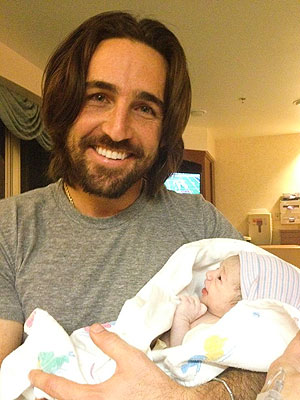
Jake Owen Welcomes Daughter Olive Pearl Courtesy Jake Owen


It’s a Thanksgiving baby!


Jake Owen and his wife Lacey welcomed their first child, daughter Olive Pearl Owen, on Thursday, Nov. 22 in Nashville, Tenn., his rep confirms to PEOPLE.


Pearl, as she will be called after Owen’s late godmother, weighed in at 6 lbs., 3 oz. and is 19½ inches long.


“Lacey and I are so excited to start our own family,” Owen, 31, tells PEOPLE. “We are looking forward to teaching Pearl everything we learned from our parents and also learning from her.”


Sharing a photo of his newborn daughter on Twitter, the musician wrote, “Today is the greatest day of my life. Turkey baby!!! Happy Thanksgiving.”

It’s been a whirlwind year for Owen and his wife, 22. After getting engaged on stage in April, the couple wed on the beach in May and announced the pregnancy in July.


– Sarah Michaud with reporting by Julie Dam


Read More..

Study finds mammograms lead to unneeded treatment

Mammograms have done surprisingly little to catch deadly breast cancers before they spread, a big U.S. study finds. At the same time, more than a million women have been treated for cancers that never would have threatened their lives, researchers estimate.

Up to one-third of breast cancers, or 50,000 to 70,000 cases a year, don't need treatment, the study suggests.

It's the most detailed look yet at overtreatment of breast cancer, and it adds fresh evidence that screening is not as helpful as many women believe. Mammograms are still worthwhile, because they do catch some deadly cancers and save lives, doctors stress. And some of them disagree with conclusions the new study reached.

But it spotlights a reality that is tough for many Americans to accept: Some abnormalities that doctors call "cancer" are not a health threat or truly malignant. There is no good way to tell which ones are, so many women wind up getting treatments like surgery and chemotherapy that they don't really need.

Men have heard a similar message about PSA tests to screen for slow-growing prostate cancer, but it's relatively new to the debate over breast cancer screening.

"We're coming to learn that some cancers — many cancers, depending on the organ — weren't destined to cause death," said Dr. Barnett Kramer, a National Cancer Institute screening expert. However, "once a woman is diagnosed, it's hard to say treatment is not necessary."

He had no role in the study, which was led by Dr. H. Gilbert Welch of Dartmouth Medical School and Dr. Archie Bleyer of St. Charles Health System and Oregon Health & Science University. Results are in Thursday's New England Journal of Medicine.

Breast cancer is the leading type of cancer and cause of cancer deaths in women worldwide. Nearly 1.4 million new cases are diagnosed each year. Other countries screen less aggressively than the U.S. does. In Britain, for example, mammograms are usually offered only every three years and a recent review there found similar signs of overtreatment.

The dogma has been that screening finds cancer early, when it's most curable. But screening is only worthwhile if it finds cancers destined to cause death, and if treating them early improves survival versus treating when or if they cause symptoms.

Mammograms also are an imperfect screening tool — they often give false alarms, spurring biopsies and other tests that ultimately show no cancer was present. The new study looks at a different risk: Overdiagnosis, or finding cancer that is present but does not need treatment.

Researchers used federal surveys on mammography and cancer registry statistics from 1976 through 2008 to track how many cancers were found early, while still confined to the breast, versus later, when they had spread to lymph nodes or more widely.

The scientists assumed that the actual amount of disease — how many true cases exist — did not change or grew only a little during those three decades. Yet they found a big difference in the number and stage of cases discovered over time, as mammograms came into wide use.

Mammograms more than doubled the number of early-stage cancers detected — from 112 to 234 cases per 100,000 women. But late-stage cancers dropped just 8 percent, from 102 to 94 cases per 100,000 women.

The imbalance suggests a lot of overdiagnosis from mammograms, which now account for 60 percent of cases that are found, Bleyer said. If screening were working, there should be one less patient diagnosed with late-stage cancer for every additional patient whose cancer was found at an earlier stage, he explained.

"Instead, we're diagnosing a lot of something else — not cancer" in that early stage, Bleyer said. "And the worst cancer is still going on, just like it always was."

Researchers also looked at death rates for breast cancer, which declined 28 percent during that time in women 40 and older — the group targeted for screening. Mortality dropped even more — 41 percent — in women under 40, who presumably were not getting mammograms.

"We are left to conclude, as others have, that the good news in breast cancer — decreasing mortality — must largely be the result of improved treatment, not screening," the authors write.

The study was paid for by the study authors' universities.

"This study is important because what it really highlights is that the biology of the cancer is what we need to understand" in order to know which ones to treat and how, said Dr. Julia A. Smith, director of breast cancer screening at NYU Langone Medical Center in New York. Doctors already are debating whether DCIS, a type of early tumor confined to a milk duct, should even be called cancer, she said.

Another expert, Dr. Linda Vahdat, director of the breast cancer research program at Weill Cornell Medical College in New York, said the study's leaders made many assumptions to reach a conclusion about overdiagnosis that "may or may not be correct."

"I don't think it will change how we view screening mammography," she said.

A government-appointed task force that gives screening advice calls for mammograms every other year starting at age 50 and stopping at 75. The American Cancer Society recommends them every year starting at age 40.

Dr. Len Lichtenfeld, the cancer society's deputy chief medical officer, said the study should not be taken as "a referendum on mammography," and noted that other high-quality studies have affirmed its value. Still, he said overdiagnosis is a problem, and it's not possible to tell an individual woman whether her cancer needs treated.

"Our technology has brought us to the place where we can find a lot of cancer. Our science has to bring us to the point where we can define what treatment people really need," he said.

___

Online:

Study: http://www.nejm.org/doi/full/10.1056/NEJMoa1206809

Screening advice: http://www.uspreventiveservicestaskforce.org/uspstf/uspsbrca.htm

___

Marilynn Marchione can be followed at http://twitter.com/MMarchioneAP

Read More..

Hazing case raises many questions


As a child, the boy would pretend to be his favorite soccer pro, sliding across the ground and narrating into an imaginary microphone, "Oh, what a save by Oswaldo Sanchez!" But his mother thought the game was too rough. So he could only play pickup.

When he entered La Puente High, his mother decided to let him play. What authorities have said happened next was staggering, and led to the arrest of four students in September.

According to Los Angeles County sheriff's officials, older soccer players sodomized younger ones — and attempted to sodomize the youth, who requested anonymity. The youth said they used a sharpened pole and called the hazing ritual "giving the palo."


Three students currently face various charges of sexual assault and battery in the hazing case. This week in court, they denied the accusations. Charges were rejected against the fourth player for insufficient evidence.

I was dumbfounded that such an atavistic rite allegedly could have taken place on a modern high school campus. So I met with the youth and his mother to find out more.

We sat in his aunt's living room in a modest ranch-style home in La Puente, around the corner from the cul-de-sac where he and his cousins learned to kick the ball around.

The 15-year-old is slight, with dark wavy hair and an enviably clear complexion for a kid his age. He spoke mostly in a monotone, only showing emotion when his mother described how he had changed since the alleged assault: fighting at school, getting angry. It seemed he couldn't stand to cause his mother more suffering. She'd cried enough.

When he first heard the older soccer players talk about giving the palo, the youth told me, he thought it was just a story made up to scare the younger kids. Even after he saw another player limp — red-faced and furious — out of a storage room the varsity players used as their locker room, he wasn't sure the hazing was real.

But in a civil claim filed against the school district, the youth describes being ordered one day last spring to put equipment away in the varsity changing room. The space, just four steps away from his coach's desk, was rumored to be where the hazing happened, he told me.

The claim details his fear, and how he asked the coach, Bahram Alavi, if he could clean his office instead. But a player came out of the locker room and said he needed the younger boy in the back; Alavi winked at the older player as he was led away, according to the youth and the claim.

The coach, who has not been charged in the criminal case, could not be reached for comment.

"Right there, I thought what everybody had been saying was true," the youth said during our conversation. Once in the room, he alleged being jumped from behind and beaten. The claim describes players trying to stick the palo inside him, and him fighting them off. The bell rang, he told me, and his alleged attackers let him go.

The youth told me that when he staggered out, "All I heard was the coach laughing."

Hacienda La Puente Unified School District Supt. Barbara Nakaoka, in a written notice to parents, said that observers had likened the scandal to the Penn State sexual abuse case, but she argued that the comparison was unfair.

She's got a point. Unlike Penn State, where officials have been charged with failing to take action for years after learning about abuse allegations against coach Jerry Sandusky, the district notified authorities as soon as the alleged hazing was reported. And I take Nakaoka at her word that she personally was appalled.

"I thought it was the most horrible thing I ever heard of," Nakaoka said in an interview.

But if ritual hazing has in fact been occurring in the La Puente soccer program for years, it raises so many questions:

Is it something to do with sports culture? (Similar allegations have been brought outside of the team structure: In Fontana, a teacher was charged with sex abuse after a student allegedly was sodomized last summer during a masonry class. That case is ongoing.)

Are certain boys targeted because they are perceived as powerless?

One thing is certain: Abuse flourishes in silence.

When the palo rite was first reported, the youth said, his teammates called a meeting to get everyone to keep their mouths shut. He went.

Feeling pained or embarrassed, the youth at first denied he'd been attacked. Later, he told administrators the story he told me, he said, because "I didn't want what happened to me to happen to anyone else."

In our conversation, he said they acted like he was "stupid" and told him he had no evidence. His mother was mostly quiet through the interview, but became indignant talking about school officials. She said the principal had told her that since her son hadn't been penetrated, he was "all right, everything's fine."

The principal, Ava Smalley, declined to comment and referred all questions about the incident to the superintendent.

I'm not sure what happened here. But I would have liked to hear from the young accuser that officials had asked how they could help him and his family.

The youth is at another school now. Some of the kids there have heard the story and make fun of him, he said, but the school lets him take a time-out to compose himself. He's getting counseling.

His grades have fallen too low to play soccer, but if he can pull them up, he'll be the varsity goalkeeper, he said.

gale.holland@latimes.com


Read More..

Cease-Fire Between Israel and Hamas Takes Effect


CAIRO — Under intense Egyptian and American pressure, Israel and the Palestinian militant group Hamas halted eight days of bloody conflict on Wednesday, averting a full-scale Israeli ground invasion of the Gaza Strip without resolving the underlying disputes.


With Israeli forces still massed on the Gaza border, a tentative calm descended after the announcement of the agreement. The success of the truce will be an early test of how Egypt’s new Islamist government might influence the most intractable conflict in the Middle East.


The United States, Israel and Hamas all praised Egypt’s role in brokering the cease-fire as the antagonists pulled back from violence that had killed more than 150 Palestinians and 5 Israelis over the past week. The deal called for a 24-hour cooling-off period to be followed by talks aimed at resolving at least some of the longstanding grievances between the two sides.


Gazans poured into the streets declaring victory against the far more powerful Israeli military. In Israel, the public reaction was far more subdued. Many residents in the south expressed doubt that the agreement would hold, partly because at least five Palestinian rockets thudded into southern Israel after the cease-fire began.


The one-page memorandum of understanding left the issues that have most inflamed the tensions between the Israelis and the Gazans up for further negotiation. Israel demands long-term border security, including an end to Palestinian missile launching over the border. Hamas want an end to the Israeli embargo.


The deal demonstrated the pragmatism of Egypt’s new Islamist president, Mohamed Morsi, who balanced public support for Hamas with a determinations to preserve the peace with Israel. But it was unclear whether the agreement would be a turning point or merely a lull in the conflict.


The cease-fire deal was reached only through a final American diplomatic push: Secretary of State Hillary Rodham Clinton conferred for hours with Mr. Morsi and the United Nations secretary general, Ban Ki-moon, at the presidential palace here. Hanging over the talks was the Israeli shock at a Tel Aviv bus bombing — praised by Hamas — that recalled past Palestinian uprisings and raised fears of heavy Israeli retaliation. After false hopes the day before, Western and Egyptian diplomats said they had all but given up hope for a quick end to the violence.


Tellingly, neither Israel nor Hamas was represented in the final talks or the announcement, leaving it in the hands of a singular partnership between their proxies, the United States and Egypt.


There were immediate questions about the durability of the deal. Hamas, which controls Gaza, has in the past not fulfilled less formal cease-fires by failing to halt all missile fire into Israel by breakaway Palestinian militants.


Neither side retreated from threats to resume the conflict if the deal fell through, and both said they had only reluctantly agreed under international pressure. In a televised news conference, Prime Minister Benjamin Netanyahu of Israel declared that some Israelis still expected “a much harsher military operation, and it is very possible we will be compelled to embark on one.”


But he said that in a telephone conversation with Mr. Obama earlier in the evening, “I agreed with him that it is worth giving the cease-fire a chance.” He added that he had reached an undisclosed agreement with Mr. Obama to “work together against the smuggling of weapons” to Palestinian militants, for which Mr. Netanyahu blamed Iran.


Khaled Meshal, Hamas’s top leader, thanked Iran for its military support in a triumphal news conference in Cairo. “This is a point on the way to a great defeat for Israel,” he said. “Israel failed in all its objectives.”


He suggested that the West had come to Hamas and its Islamist allies in Egypt pleading for peace. “The Americans and the Europeans asked the Egyptians, ‘You have the ear of the resistance,’ ” he said, using the term Hamas prefers to describe itself and other Palestinian militants fighting the Israeli occupation. “Egypt did not sell out the resistance as some people have claimed. Egypt understood the demands of the resistance and the Palestinian people.”


David D. Kirkpatrick reported from Cairo, and Jodi Rudoren from Gaza. Reporting was contributed by Fares Akram from Gaza, Isabel Kershner and Ethan Bronner from Jerusalem, Mayy El Sheikh from Cairo and Rick Gladstone from New York.


Read More..

Mayim Bialik and Michael Stone Divorcing


11/21/2012 at 05:00 PM EST


After "much consideration and soul-searching," Mayim Bialik announced Wednesday that she and husband Michael Stone are divorcing after nine years of marriage.

The Big Bang Theory star, who has sons Miles, 7, and Fred, 4, with Stone, cites "irreconcilable differences" for the split, which she revealed in a statement on her Kveller.com parenting blog.

"Divorce is terribly sad, painful and incomprehensible for children. It is not something we have decided lightly," she writes.

The former star of TV's Blossom, 36, also says that the split is not due to the attachment parenting she discusses in her book Beyond the Sling. "Relationships are complicated no matter what style of parenting you choose," she says.

"The main priority for us now is to make the transition to two loving homes as smooth and painless as possible," Bialik, 36, continues. "Our sons deserve parents committed to their growth and health and that’s what we are focusing on. Our privacy has always been important and is even more so now, and we thank you in advance for respecting it as we negotiate this new terrain."

She concludes by saying, "We will be ok."

The couple were married in August 2003 in Pasadena, Calif.

Read More..